Balance Between Skill and Randomness
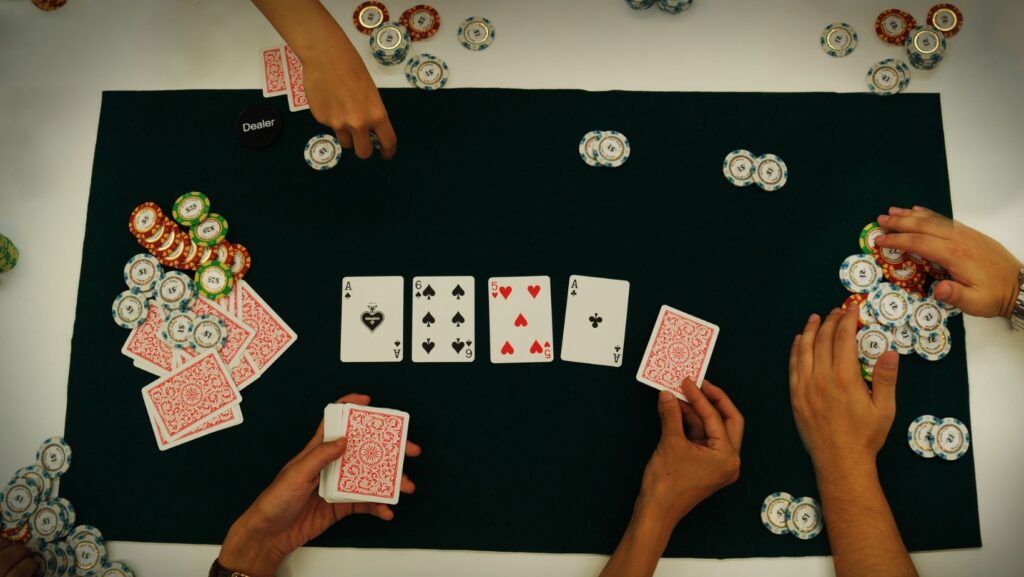
Every casino game exists somewhere on the spectrum between skill and randomness. While dice, reels and roulette wheels symbolize luck, games like poker and blackjack blend mathematics, psychology and probability. Understanding this balance reveals how players influence outcomes and where chance alone governs results. The harmony between these forces defines both entertainment and fairness in gambling.
Role of Skill in Modern Gaming
At UniBet Casino, players often ask which games can be mastered and which rely purely on probability. Skill affects decisions, timing and money management. Strategic awareness doesn’t remove randomness, but it reduces its impact.
In blackjack, optimal play—following statistical charts—can cut the house edge to as little as 0.5%. Poker, another skill-heavy game, allows professionals to maintain long-term profitability despite short-term variance. In contrast, slot machines and roulette remain governed entirely by random number generators or physical chance, offering no direct influence through decision-making.
Skill-based elements are also emerging in digital formats. Developers now integrate mini challenges and player-controlled bonuses, reflecting a new generation of hybrid casino design where reflexes and timing can matter as much as luck.
How Randomness Defines Casino Fairness
Randomness ensures that every spin, card or dice roll is independent and unpredictable. Casinos use Random Number Generators (RNGs) certified by authorities such as eCOGRA and iTech Labs to guarantee fairness.
Without randomness, games would lose integrity. RNG testing involves millions of simulated rounds to verify equal probability distribution. For example, in European roulette, the chance of any number appearing remains 1 in 37 (2.7%)—unchanged by previous results.
This unpredictability underpins the excitement of gambling. Players trust that no hidden pattern exists, even when outcomes seem streaky. The statistical truth remains constant: past results never alter future odds.
Comparing Skill and Chance Across Game Types
Casino games can be categorized by how much skill affects long-term outcomes.
| Game Type | Skill Influence | Randomness Influence | Typical House Edge |
| Poker | Very High | Moderate | None (player vs. player) |
| Blackjack | High | Moderate | 0.5%–1% |
| Sports Betting | Medium | Medium | Variable (margin 4%–7%) |
| Roulette | None | Very High | 2.7%–5.3% |
| Slots | None | Extremely High | 3%–6% |
| Baccarat | Low | High | 1.06%–1.24% |
This breakdown illustrates how skill shifts a player’s expected value. In poker and blackjack, decision-making influences returns. In pure chance games, probabilities are fixed regardless of player input.
How Probability Shapes Skill Outcomes
Even in skill-driven games, probability governs long-term results. A skilled poker player may lose a single hand but profit across thousands of sessions. This concept, known as “variance,” measures deviation from the expected outcome.
In blackjack, using perfect strategy across 10,000 hands typically aligns with mathematical forecasts. Over smaller samples, however, random fluctuations dominate. Casinos rely on these short-term variances to ensure house profit despite fair odds.
Mathematically, probability creates structure, while skill creates optimization within that structure. Understanding this relationship separates casual play from calculated gaming.
Evolution of Skill-Based Slot Games
In recent years, developers have introduced hybrid slots that merge reflex elements with RNG systems. Games like Space Invaders Roulette or Danger Arena reward player accuracy and reaction speed within randomized frameworks.
These innovations cater to younger demographics seeking interactive experiences. Regulators such as the Nevada Gaming Control Board classify them as “participatory gaming devices,” where partial skill determines bonus frequency. Yet even here, randomness remains foundational—skill can only shift payout distribution slightly, not guarantee outcomes.
Sports Betting and Predictive Strategy
Sports betting exemplifies a balanced relationship between skill and randomness. Bettors analyze data, injuries, weather and form to predict outcomes. Yet even perfect information can’t remove uncertainty.
Statistical edges emerge through long-term consistency, not single wagers. A bettor hitting 54% of wagers at even odds achieves positive expectation despite losing nearly half the time. Bookmakers maintain house advantage through margin control—typically between 4% and 7%.
Professional bettors rely on probability models like Poisson distribution or Monte Carlo simulations to identify market inefficiencies, translating skill into sustained profitability.
Influence of Technology on Fairness
Artificial intelligence now monitors casino fairness and player behaviour. RNG systems are paired with encryption to prevent manipulation. Blockchain-based platforms go further, offering “provably fair” gaming where outcomes are verifiable by players through public algorithms.
This transparency enhances trust in games dominated by randomness. Simultaneously, AI-driven opponent balancing in skill games such as poker ensures fair matchmaking by evaluating player history and reaction time.
Technology, therefore, not only preserves randomness but also maintains equilibrium between skill and fairness.
How Players Manage Skill and Chance
Professional gamblers approach risk mathematically. They allocate bankrolls using structured formulas such as the Kelly Criterion, which calculates optimal wager size based on perceived advantage.
In contrast, casual players tend to rely on intuition. Recognizing when a game allows influence—and when it doesn’t—is key to responsible enjoyment. Skill should be applied where it has measurable effect; chance should be accepted where control ends.
For instance, applying blackjack strategy charts improves outcomes, but in roulette, every spin remains equally unpredictable no matter the pattern perceived.
Where the Balance Truly Lies
Skill and randomness coexist as two forces shaping every casino experience. Randomness ensures fairness and excitement, while skill introduces depth, strategy and individuality. Together, they create sustainable entertainment—an environment where mastery can thrive within mathematical boundaries.
In modern iGaming, the boundary between these forces is narrowing. Hybrid games, predictive betting tools and participatory slots signal an era where luck remains vital but no longer absolute. The future of gambling belongs to players who understand not how to control chance—but how to play intelligently within it.


